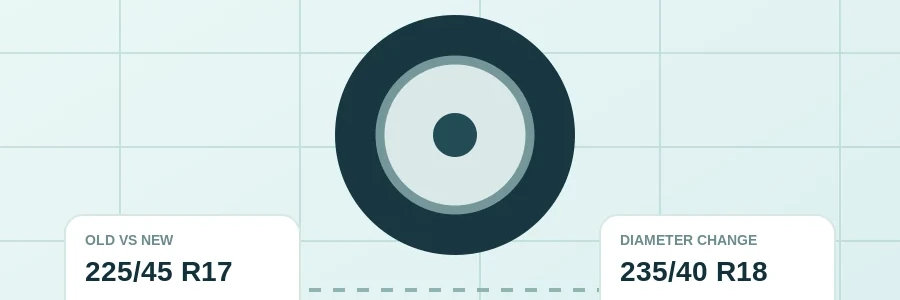
What Does the Tyre Size Comparison Calculator Do?
This comparison places two nominal tyre sizes side by side and calculates changes in sidewall, diameter, circumference and revolutions per mile. It also illustrates the geometric road-speed change if the vehicle's calibration remains based on the original rolling size. The visual comparison helps show the direction and scale of a size change, while the measurements make the assumptions inspectable.
How to Use This Calculator
- Enter the current tyre size in the displayed format, such as 205/55R16. Include width, aspect ratio and rim diameter; load and speed ratings are important for fitment but are not part of this geometry input.
- Enter the proposed tyre size using the same format. Check both entries against the actual sidewall or technical specification instead of relying on a vehicle badge or an unverified listing.
- Enter an indicated speed for the comparison. The model uses the diameter ratio and assumes the original size provides the baseline calibration; it does not measure an existing speedometer error.
- Calculate and compare diameter, sidewall and circumference changes. Read the indicated-versus-geometric-speed result as a relative change, then verify ratings, clearances and vehicle-specific approval separately.
The Maths & Assumptions Behind the Tool
For each tyre, diameter in millimetres = 2 × width × aspect percentage ÷ 100 + rim inches × 25.4. Circumference equals diameter × pi. Percentage diameter change = (new diameter ÷ old diameter − 1) × 100. Geometric speed after the change = entered indicated speed × new diameter ÷ old diameter, assuming the original calibration is exact. Existing speedometer bias and real rolling-radius differences are not measured by this formula.
Worked example
225/45 R17 has a nominal diameter of 634.3 mm. A 235/40 R18 has a nominal diameter of 645.2 mm: 1.72% larger. The radius increases by 5.45 mm.
With otherwise identical calibration, 70 mph indicated would correspond to about 71.20 mph geometrically. This does not include the vehicle’s existing speedometer tolerance and is not fitment approval. Check clearance, load rating, speed rating and approved sizes separately.
Why This Matters for UK Drivers
Enter the complete original and proposed size codes, including aspect ratio and rim diameter. A wider tyre does not necessarily have a larger overall diameter: a lower aspect ratio can offset the extra width or a larger rim. Compare the calculated radius change separately from the diameter change. Ground-clearance change is based on radius and is therefore half the overall-diameter difference in this simple geometry.
Fitment needs more than matching circumference. Wheel width, load rating, speed rating, clearances, axle requirements and manufacturer approvals remain outside the calculator. The displayed road-speed comparison also excludes any tolerance already built into the speedometer. Do not interpret a small percentage change as automatic approval or a statement of legal compliance. Use it to identify what changed, then confirm suitability using the actual vehicle and tyre specifications.
Interpreting the result in practice
A diameter percentage is a screening number, not a universal approval rule. A small circumference change can coexist with an unsuitable width, load rating or rim requirement. A large change can affect more than indicated speed, including gearing and available clearance. The calculator deliberately avoids a simple green tick that would imply it has checked the full vehicle and tyre combination.
When comparing larger rims with lower-profile tyres, inspect the derived sidewall heights as well as diameter. Two combinations can have similar overall diameter while providing different nominal sidewall dimensions. That geometry alone does not predict ride quality, grip or durability, because construction and operating conditions also matter. Keep the result alongside the tyre manufacturer's fitment information and the vehicle's approved specifications.
The direction of the speed change is worth checking. With a larger nominal rolling circumference, each wheel revolution covers more ground. If the vehicle still interprets wheel revolutions using the original size, the geometric speed associated with an indicated value rises. A smaller circumference has the opposite effect. This is a relative model; the actual instrument may already have an offset and other calibration behaviour.
For a hypothetical 2% diameter increase, an indicated 60 mph corresponds to 61.2 mph under the calculator's exact-original-calibration assumption. That does not establish the vehicle's actual road speed, because the starting calibration has not been measured. It also does not establish compliance with any speedometer requirement.
Record both full size codes with a comparison. A note saying only '18-inch wheels' omits width and sidewall, so it cannot reproduce the result. If replacing wheels as well as tyres, use the offset calculation for nominal inboard and outboard changes, then assess the complete combination using reliable vehicle-specific fitment information.
Read a tyre size in one line
For 225/45 R17, 225 is nominal section width in millimetres, 45 is sidewall height as a percentage of width, and 17 is wheel diameter in inches. Entering the complete code is faster and less error-prone than filling three separate boxes.
What the comparison shows
The result includes both tyres side by side, a scaled diameter graphic, nominal circumference, revolutions per mile, ground-clearance change and the geometric road-speed effect at common indicated speeds.